Each year, the IRS and other governing authorities issue updates to various regulatory requirements and limits that may affect your company’s benefit plan. Below is a highlight of recent updates impacting calendar year 2026.
2026 IRS Limits
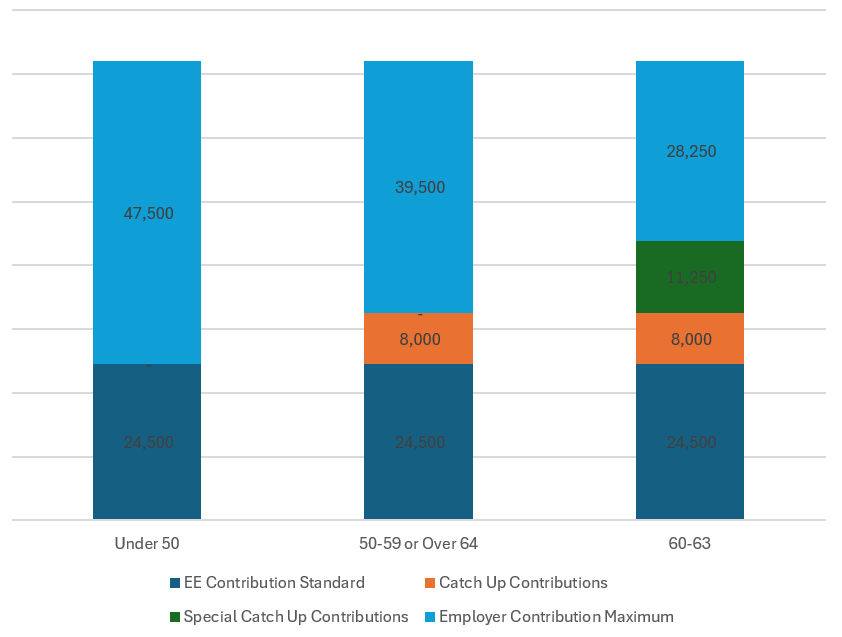
- Employee contributions are limited to$24,500.
- Catch up contributions for individuals aged 50+ are $8,000.
- Special catch-up contributions for individuals between 60 and 63 years old remains at $11,250.
- Total contributions for individuals are limited to the lesser of $72,000 or an employee’s total compensation for the year.
- Highly compensated employee threshold is $160,000 and the key employee threshold is $235,000.
- Annual compensation limit is $360,000.
SECURE 2.0 Act Impacts
Although SECURE 2.0 has been in place since 2022, the impacts of the legislation have been phased to be implemented through 2033. For 2026, here are key pieces that may impact your benefit plan:
- Mandatory Roth Catch Up for High Earners: Employees aged 50+ who earn more than $150,000 in wages in the prior year must make all catch up contributions on a Roth (after tax) basis. This applies to all 401(k), 403(b) and governmental 457(b) plans.
- Annual paper statement requirement – Defined contribution plans are required to issue at least one paper benefit statement annually unless the participant chooses electronic delivery. Defined benefit plans must provide a paper statement once every three years, with the same option to opt for electronic delivery.
- Plan document amendments for SECURE 2.0 – Any revisions to your plan operations because of SECURE 2.0 must be formally documented in a revised plan document or an amendment to the existing plan document no later than December 31, 2026 (union plans under collective bargaining agreements and governmental plans have extended deadlines to 2028 and 2029, respectively).

As an audit manager in the firm’s Neenah, WI, office, I provide audit services for commercial entities, nonprofit organizations and employee benefit plans.